HISTORY OF PRINTER
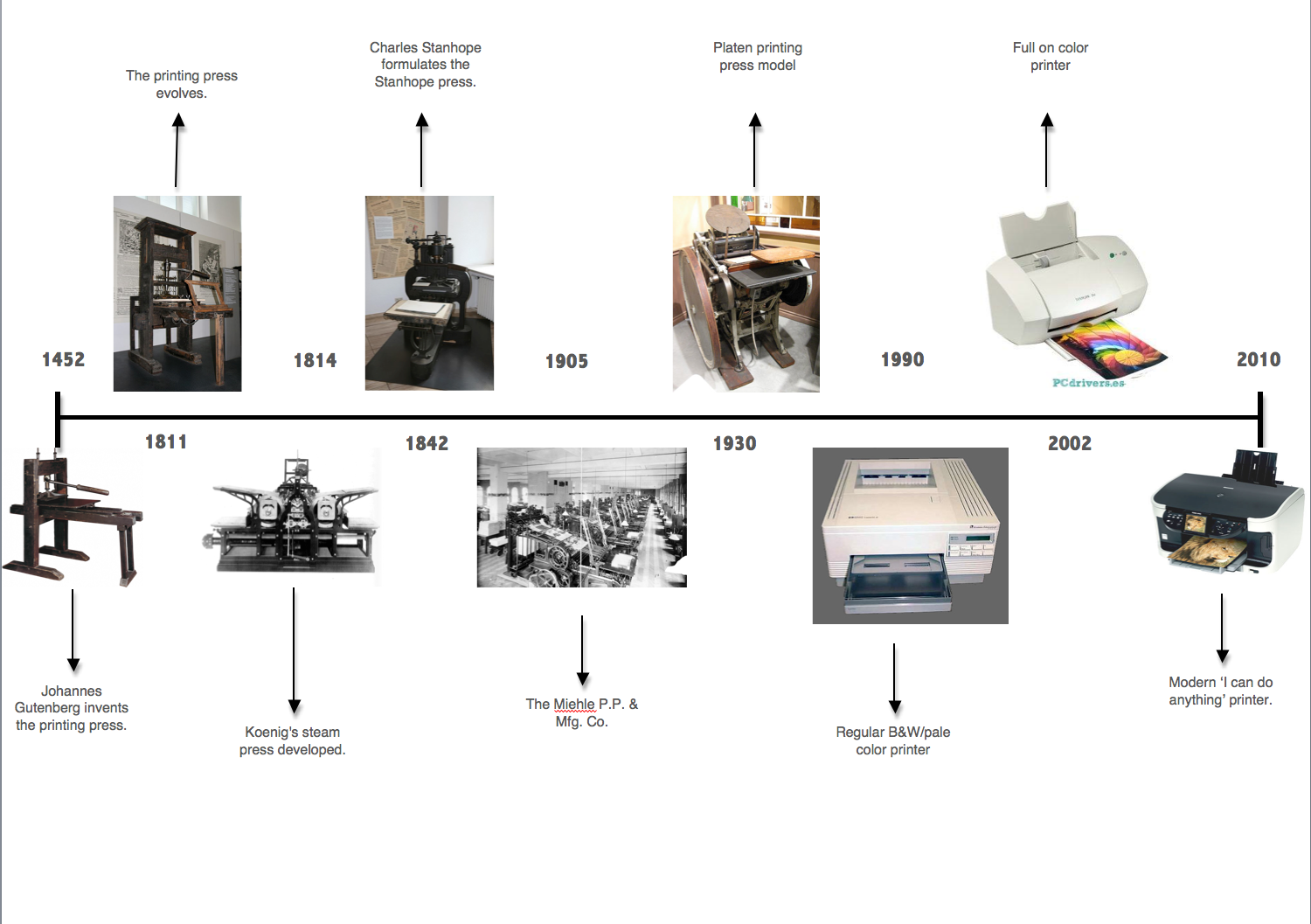
Invention of Printing Press (1440s)
Johannes Gutenberg is credited with inventing the printing press, a mechanical device that revolutionized printing by using movable type. This marked the beginning of mass printing.
Early Printing Technologies (19th Century)
Various printing technologies evolved, including the development of the steam-powered printing press and the invention of lithography, enabling more efficient and diverse printing methods.
Dot Matrix Printers (1970s)
Dot matrix printers were one of the earliest computer printers. They used a matrix of tiny pins to create characters and graphics by striking an ink-soaked ribbon against paper.
Inkjet Printers (1980s)
Inkjet printers emerged, utilizing liquid ink droplets to create high-quality prints. They became popular for both home and office use due to their versatility and affordability.
Laser Printers (1970s, Commercialized in 1984)
Laser printers utilized laser technology to create high-resolution prints. They became widely adopted in offices for their speed and precision.
3D Printers (1980s, Popularized in 2010s)
3D printing technology emerged, allowing the creation of three-dimensional objects layer by layer. It found applications in various industries, including manufacturing and healthcare.
Wireless and Network Printing (2000s)
Printers became increasingly connected to computers and networks, allowing wireless printing and facilitating shared access in offices and homes.
Advancements in Printing Technologies (2010s)
Printing technologies continued to advance, with improvements in speed, resolution, and energy efficiency. 3D printing saw increased innovation, and eco-friendly printing practices gained attention.
Mobile Printing (2010s)
With the rise of smartphones and tablets, mobile printing apps and wireless connectivity features became common, allowing users to print directly from their mobile devices.
Current Trends (2020s)
Printers continue to evolve, incorporating technologies such as artificial intelligence, cloud printing, and improved sustainability features. The industry is adapting to changing needs and environmental concerns.
HOW PRINTERS HAVE AFFECTED IN DAILY LIFE?
Easier Reading and Sharing
Printers help us make physical copies of documents, making it easier to read, share, and reference information.
Useful for Working and Learning from Home
Printers are handy for printing documents, assignments, and study materials, especially in situations where we work or learn from home.
Expressing Creativity and Personalizing Spaces
Printers let us print custom designs, artwork, and photos, allowing us to add a personal touch to our living and working spaces.
Helpful for Businesses
In businesses, printers are important for tasks like printing reports, invoices, and marketing materials, helping organizations run smoothly.
Keeping Important Records
Printers are used to make physical copies of important documents like contracts and certificates, which are then stored for future reference. This helps in keeping records organized.
IMPORTANCE OF PRINTER IN BUSSINESS

Document Creation and Reproduction
Printers are essential for generating hard copies of important documents, reports, and presentations, facilitating effective communication within and outside the organization.
Professionalism and BrandingWell-designed and printed materials, such as business cards, brochures, and marketing collateral, contribute to a professional image and play a vital role in marketing and branding efforts.
Archiving and Compliance
Printers enable businesses to maintain hard copies of documents for archiving purposes, ensuring compliance with legal and regulatory requirements.Collaboration and Meetings
Printed materials aid collaboration during meetings, allowing participants to follow along with printed agendas, reports, and presentations, fostering more interactive and focused discussions.Flexibility and Convenience
In-house printing provides businesses with flexibility and convenience, eliminating the need to rely on external services and allowing for quick, on-demand production of various materials.